
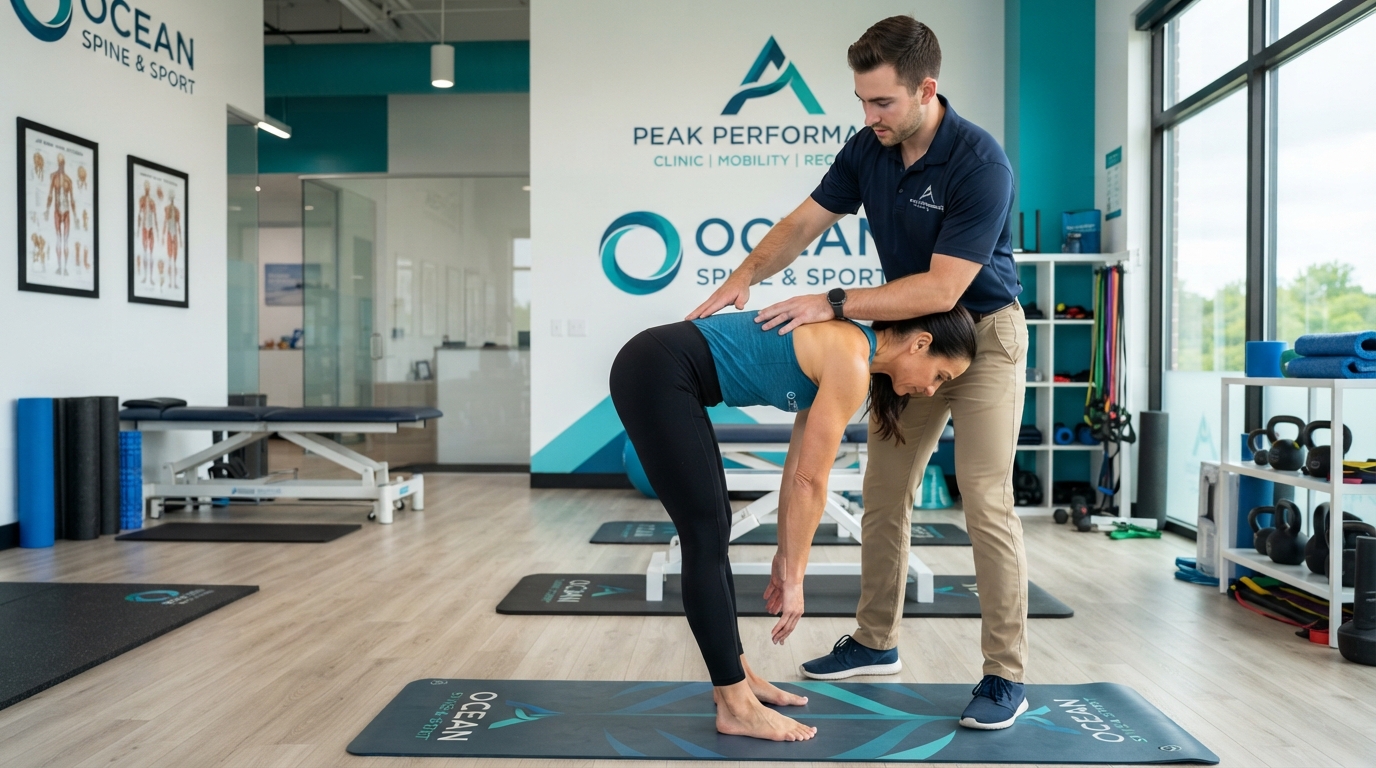
Introduction to Topic
Back pain in America is a huge problem affecting our ability to work, play, and to live any sort of physical life. As well, we experience the anxiety of being physically debilitated, depression, and frustration over not knowing if an answer exists or if the answer is going to have large risks or be ineffective.
I personally had back pain for over 20 years although the last few were wildly better than the first. Luckily, mine hit when I was young right after high school. This, more than anything, eliminated the ‘I’m just getting old fallacy.’ But this experience combined with a deep study in the movement sciences led to our approach today.

Symptoms
Typically, back pain will have multiple symptoms. They may include but are not limited to:
- Top of the hips are painful
- Low back locks up where standing fully into extension is almost impossible
- Deep pains in the lower abdomen (usually secondary to the lower back)
- Difficulty breathing
- Deep pains on one or both sides of the spine particularly with movement
- May combine with sciatic or femoral nerve pain
Conventional Approach
Typical approaches to back pain are anti-inflammatory injections, surgery, chiropractic adjustments, and physical therapy.

Conventional Approach Risks
Anti-inflammatory injections
Connective tissue atrophy is the unwanted thinning of elastic tissue and collagen fibers in the fascial matrix that creates the movement matrix (including tendons and ligaments) of the body, caused by steroid medications.
Surgery
Back surgery can be more risky and has less predictive effectiveness than other surgeries (hip/knee) due to the more complex nature of the spinal and back anatomy. Risks include infection, spinal injury, blood clots, and increased injury. However, one big risk is that it simply isn't effective — and now, as surgery is 'intentional injury', you've added more damage, making a more effective approach less likely to provide the desired results.
Chiropractic alone
While chiropractic holds less risk than other approaches, when performed alone without addressing the muscular element of the issue, the main risk is the hyper elasticity of connective tissue/ligaments and tendons and a lack of stabilization in the adjusted joints.
Physical Therapy (insurance paid)
PT typically is too isolated in its approach (both in anatomical area and scope of developmental physiological spectrum) to be fully effective and so has limited results. Cash-based PT's are starting to correct for this, essentially becoming kinesiologists.
Root Cause
Back pain is multi-factored in its cause. Tissue damage in the form of an injury is, of course, one of the causes. Also, tissue damage due to overuse or underuse such as in a disc issue is another.
However, a main component (and more likely cause of the pain) of the issue of back pain is DYSKINESIS. This is simply a fancy term for ‘bad movement’. The body detects that it no longer knows how to move appropriately and so protects the vital elements (spine, etc) with restriction. Pain is the method used to restrict movement.
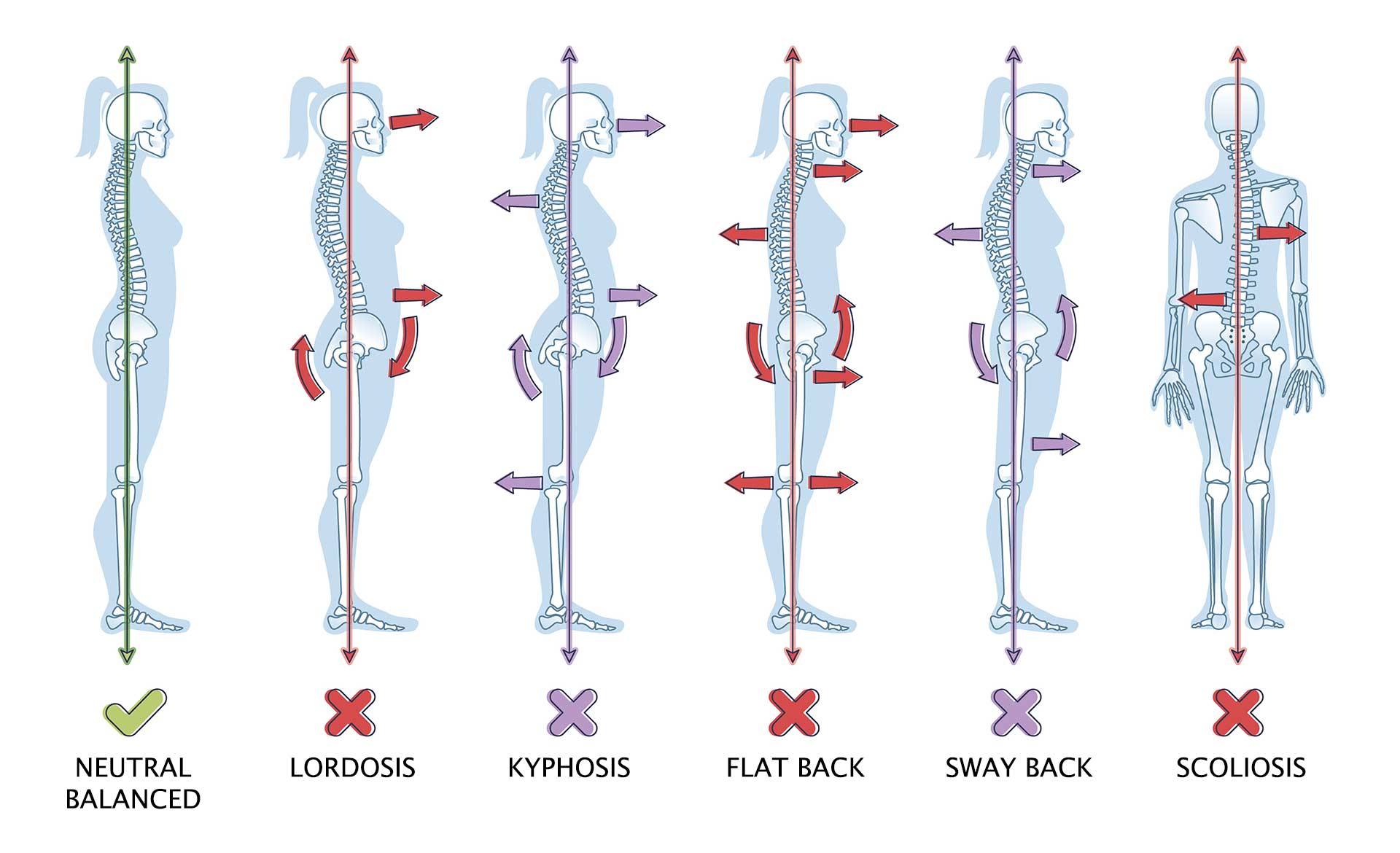
Dyskinesis is characterised by heavy tissue restriction, bad posture, dysfunctional gait and movement patterns, and lack of coordination and synergy of deep stabilizing musculature.
Fascia, as the new buzzword, is a very important element. But should be understood in context of the entire movement system.
Correcting for this component of the overall pain puzzle will not only help alleviate the issue completely if this is the only component involved, but will help to allow for better movement even if a more acute cause/injury is present.
Kinesiology / RootHealth Approach
Assessment
Very first, we have to assess the entire system. We only look at movement. Your doctor will look at MRI’s or other imaging for medical diagnostics.
The Complex
We analyze the ability of the complex to be balanced with relation to restrictive and coordinative patterns.
Posture
Posture is really looking at the whole body as a single complex. Therefore, we must assess this in the same way we look at the lumbo-pelvo hip complex itself.
Movement
We look at gait as 'posture in motion' then at specific movement patterns to identify dyskinesis.
Stabilization
We must identify the body's ability to stabilize appropriately to determine dysfunctional elements for correction.
Correction
Remove restriction
From our assessment, we use specialized techniques to alleviate restrictive patterns allowing for re-engagement of appropriate coordination.
Recoordinate
We also use specialized techniques to re-establish the muscular coordination of identified dysfunctional musculature.
Integration & progression
It is important to not stop the process simply when the pain has been reduced or eliminated. We build on our new foundation with integration of gross strength and repetitive motion for full body motor development and lifelong capability.
Stats & Supporting Research
of U.S. adults experience low back pain over a three-month period.
Nearly 65 million Americans report a recent episode of low back pain.
Up to 80% of individuals experience low back pain at some point in their lives.
Chronic low back pain impacts roughly 8% to 10% of the adult population.
The prevalence of low back pain underscores the importance of addressing the root movement cause — dyskinesis — rather than relying solely on injections, surgery, or isolated treatments. Our kinesiology-based approach corrects the underlying movement dysfunction to deliver lasting relief.
Ready to Move Without Back Pain?
Address the root cause of your back pain and build a fluid, centered, and strong foundation for life — without surgery or drugs.
Apply To Join RootHealth Today!